Ad Blocker Detected
Our website is made possible by displaying online advertisements to our visitors. Please consider supporting us by disabling your ad blocker.
We can expect to pay about $500–$1,500 for an entry-level water ionizer, while premium models may cost $2,000–$5,000 or more. But the purchase price is only part of the equation: filters, installation, maintenance, and repairs can substantially change five-year costs. We’ll compare price tiers, key features, and ongoing expenses to see which models justify their cost—and where a lower-priced unit may make more sense.
Key Takeaways
- Entry-level water ionizers typically cost $500–$1,500, while premium models often range from $2,000 to $5,000 or more.
- Compare similar models by filtration, capacity, plate quality, warranty, and verified performance—not plate count or premium features alone.
- Estimate total ownership costs over three to five years, including filters, installation, maintenance, shipping, and likely service fees.
- Filters typically cost $30–$100 each and require replacement every 6–12 months; maintenance may add $50–$200 annually.
- Installation can add $100–$500 or more; request itemized quotes and verify warranty coverage, filter costs, and replacement intervals before buying.
What Does a Water Ionizer Cost?
What does a water ionizer cost? We should budget for more than the advertised purchase price: shipping, installation, replacement filters, and maintenance can raise total ownership costs. Prices vary by seller and model, so compare current quotes and confirm exactly what each includes before buying. Check filter prices and expected replacement intervals; these recurring expenses often matter more over several years than a small upfront discount.
Water ionizer financing can spread payments, but we should calculate the full amount due, including interest, fees, and any required service plan. Compare that total with the cash price, not just the monthly payment. If we’re considering a used unit, ask about its age, condition, service history, and remaining coverage. Refurbished ionizer warranties differ in duration and exclusions, so get terms in writing and verify who handles repairs. These checks help us estimate realistic costs before committing.
How Do Ionizer Prices Compare by Tier?
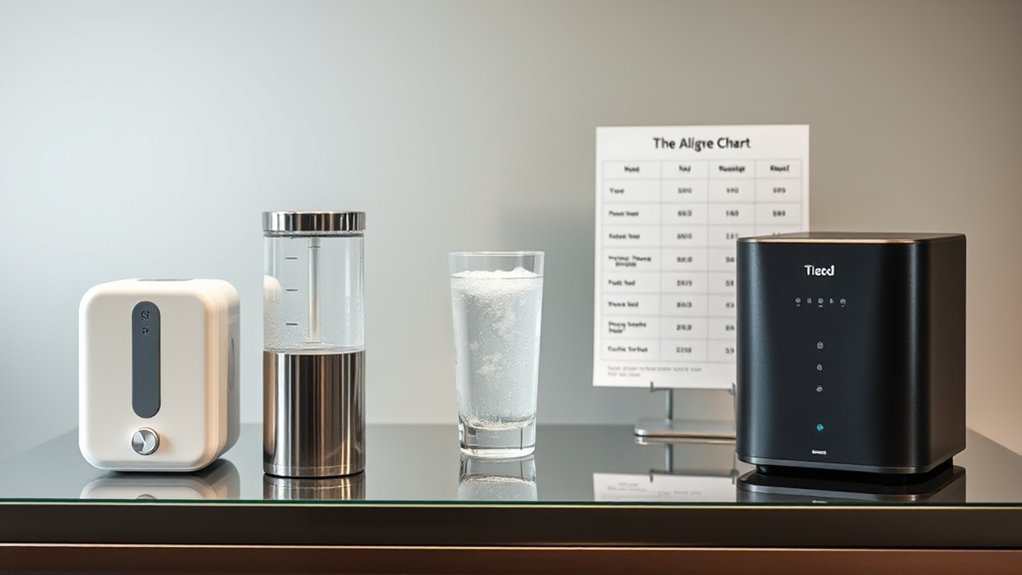
We can compare ionizer tiers by upfront price, features, and expected operating costs. Entry-level models typically cost less, while premium-tier pricing reflects added capabilities and higher-end components. We’ll weigh these differences to show what each tier offers for your budget.
Entry-Level Models
Entry-level water ionizers typically cost about $500–$1,500, putting them well below midrange and premium models. For first time buyers, Budget friendly models can reduce the upfront cost while providing basic filtration and a modest range of pH settings. We should compare included features, not just sticker prices, because replacement filters and warranties affect ownership costs.
| Price range | Typical value |
|---|---|
| $500–$900 | Basic controls, fewer settings |
| $901–$1,500 | More settings, stronger warranties |
At the lower end, we may find simpler designs and shorter coverage periods. Near $1,500, manufacturers may add improved controls or longer warranties, though features vary by brand. Before buying, we should check filter prices, replacement intervals, installation requirements, and warranty terms. These recurring expenses can narrow the apparent savings, so we can estimate total first-year cost before choosing a model.
Premium-Tier Pricing
Premium water ionizers typically cost $2,000–$5,000 or more, with the price reflecting features such as additional electrode plates, expanded pH settings, and longer warranties. Compared with entry-level units, premium models may offer greater output capacity, more precise controls, and upgraded materials. We should compare these specifications against the price difference rather than assume a higher cost guarantees better results.
Luxury model pricing can exceed $5,000 when brands add advanced displays, automated cleaning, or extended service coverage. Check whether those extras address your household’s needs and whether replacement filters or maintenance raise long-term costs. Warranty length matters, but we should also review what it covers and who pays for service.
If upfront cost is a concern, financing options can spread payments, though interest and fees may increase the total. Compare the financed total with the cash price before choosing.
What Features Drive Water Ionizer Prices?
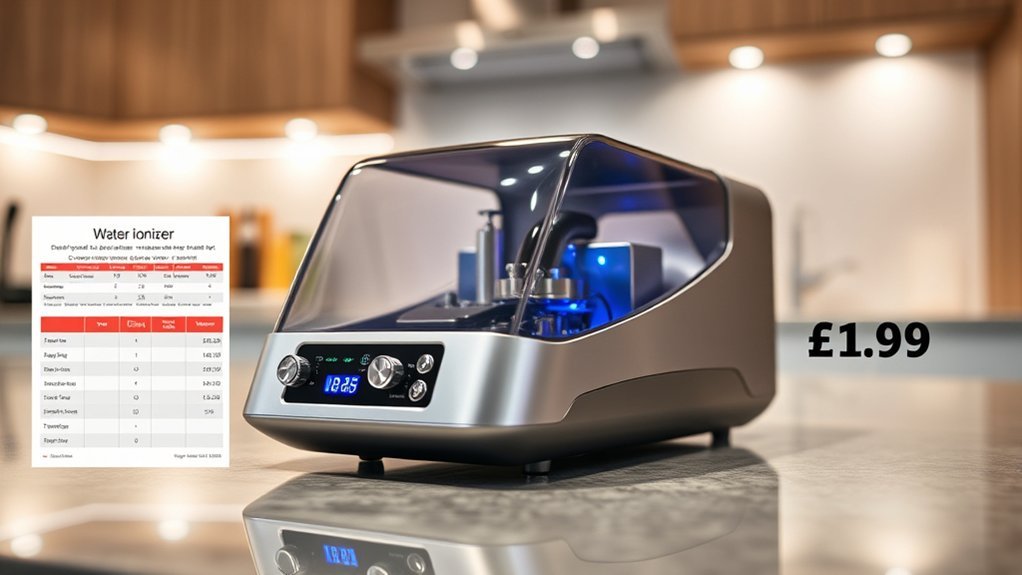
To understand price differences, we should compare electrode count and quality, which affect performance and manufacturing cost. Filtration stages and control features also add to the bill, so we’ll assess their costs against the value they provide.
Electrode Count And Quality
Electrode count and construction directly affect an ionizer’s price because they shape its processing capacity and durability. More plates provide greater electrode surface area, supporting higher output and more consistent performance under demand. Manufacturers often charge more for units with seven or more plates than for basic models with three to five, though count alone doesn’t guarantee value. We should compare plate area, thickness, and the quality of electrode materials, not just the number listed. Titanium plates with a platinum coating typically cost more than lower-grade alternatives, but can resist corrosion and maintain performance longer. That improves plate durability and may reduce replacement costs over the unit’s service life. When we assess price, we should weigh the upfront premium against expected lifespan, output needs, and warranty coverage for the electrode assembly.
Filtration And Controls
Beyond plate count and material quality, filtration and control systems also shape an ionizer’s price. We should compare replacement costs, filter capacity, and interface complexity—not just the purchase price. A longer Filtration lifespan can lower annual ownership costs, while advanced sensors may raise the initial bill. Check what each model includes:
- Filter stages: More stages can target additional contaminants, but cartridges cost more to replace.
- Filtration lifespan: Compare rated gallons and replacement intervals; household water quality affects actual service life.
- Control interface: Touchscreens, presets, and automatic monitoring add convenience, yet simpler buttons may reduce repair risk.
- Maintenance alerts: Flow or filter-life indicators help us replace cartridges on schedule and avoid unnecessary changes.
We can estimate five-year costs by adding cartridge prices, expected replacements, and likely service fees to the upfront price. This reveals whether premium controls deliver measurable value.
How Do Plate Count and Build Quality Affect Cost?
As plate count and build quality rise, so does the cost of a water ionizer, but the price premium matters only if it delivers measurable benefits. More plates can increase electrode surface area and support higher output, yet they don’t guarantee better water or justify any price. Compare plate count with rated flow, power use, and warranty terms to judge value. Plate material also affects cost: titanium plates with platinum coating typically cost more than lower-grade alternatives, while coating thickness and coverage influence durability. Manufacturing tolerances matter because consistent spacing and precise assembly can support stable performance and reduce defects. We should weigh these specifications against the price difference, not treat premium construction as proof of quality. Ask for verifiable materials, performance data, and service-life evidence before paying extra.
What Does Installation Add to the Price?
Installation can add labor and service fees, which vary by provider and job complexity. We should also account for plumbing modifications, since new connections or rerouting can raise the total cost. Compare itemized quotes to see how these charges affect the installed price.
Labor and Service Fees
Labor and service fees can add $100–$500 or more to a water ionizer’s purchase price, depending on plumbing changes, electrical work, and local rates. We should separate installation labor from equipment costs when comparing quotes, since hourly rates and minimum charges vary.
- Technician call out fees: Expect roughly $50–$150 for a visit, sometimes credited toward completed work.
- Installation labor: A straightforward setup may take one to three hours; at $75–$150 per hour, labor can reach $450.
- Electrical work: A new outlet or circuit can raise the bill; request a separate estimate.
- Warranty labor coverage: Check whether the warranty pays for technician time, not just replacement parts.
We can ask for an itemized quote and confirm travel, diagnostic, and after-hours charges before booking. This helps us compare total service costs accurately.
Plumbing Modifications
Plumbing modifications can add $50–$500 or more to a water ionizer installation, depending on whether we need new shutoff valves, tubing, or changes to the sink or countertop. A basic dedicated shutoff or connector replacement may cost $50–$150; pipe rerouting or drilling through stone can push the bill toward $500 or higher. Ask your installer to itemize parts and labor before work begins.
| Modification | Typical added cost |
|---|---|
| Shutoff valve and tubing | $50–$150 |
| Pipe rerouting | $150–$500+ |
We can often limit costs by placing the unit near existing plumbing and confirming cabinet clearance. If the quote includes countertop drilling, check whether the surface requires specialized tools. Compare the proposed scope with your current connections: unnecessary upgrades add expense without improving water flow or ionizer performance.
How Much Do Filters and Maintenance Cost?
Once you’ve bought a water ionizer, budget for replacement filters and routine upkeep: filters typically cost $30–$100 each and need replacing every 6–12 months, while annual maintenance can add $50–$200, depending on the model and water quality. We can keep spending predictable by checking the manual and tracking local water conditions.
Budget for $30–$100 replacement filters every 6–12 months, plus $50–$200 in annual maintenance.
- Replacement filter schedules: Follow the manufacturer’s interval, but replace sooner if flow drops or taste changes.
- Filter count: Some models use multiple cartridges, multiplying the per-filter expense.
- Descaling supplies: Set aside roughly $10–$30 yearly for approved cleaners, especially with hard water.
- Service visits: Professional inspection may cost $50–$150; compare that fee with included warranty service.
We should also confirm cartridge availability and prices before purchase. Choosing a model with accessible, reasonably priced filters helps us control routine upkeep without compromising water quality.
What Is the Total Cost Over Five Years?
Over five years, a water ionizer’s total cost combines its purchase price, replacement filters, maintenance, and any installation or service fees. We can estimate the full amount by adding each expense across the same period, rather than comparing purchase prices alone. For example, a $1,500 unit with $100 annual filter costs and $50 yearly maintenance totals $2,250 before installation or repairs. Five year replacement costs vary with filter life, water quality, and manufacturer pricing, so we should use the model’s replacement schedule and current parts prices. Add any one-time setup fee and likely service charges to refine the estimate. This calculation makes long term operating expenses visible and helps us compare ownership costs consistently. We should also account for warranty coverage, since excluded repairs can raise the five-year total.
Are Premium Water Ionizers Worth the Price?
Are premium water ionizers worth the price? We should judge them by measurable benefits, not by price or promises alone. Compare the premium model’s added cost with its expected service life, replacement parts, and features we’ll actually use. Long term value depends on reliable performance and manageable upkeep, not a high purchase price.
Premium water ionizers are worth the extra cost only when their durability, upkeep, and useful features justify it.
- Capacity: Higher output matters if our household uses large volumes; otherwise, it may add little value.
- Filtration: We should compare filter lifespan and replacement costs, since these affect ownership expenses.
- Warranty: Longer coverage can reduce repair risk, but we should check what it excludes.
- Health claims: We shouldn’t assign financial value to unproven medical benefits; evaluate water quality claims against credible evidence.
If premium features don’t solve a specific need, a less expensive unit may deliver comparable practical value. We can pay more when documented performance and durability justify the difference.
How Can You Avoid Overpaying for an Ionizer?
To avoid overpaying for an ionizer, we should compare the total cost of ownership—not just the sticker price—across models with similar filtration, capacity, and warranty terms. Add replacement filters, shipping, installation, and expected maintenance to each model’s cost over three to five years. Then use retailer comparison to check current prices, included accessories, return policies, and warranty coverage; a lower quote may omit services that another seller includes. Verify filter prices and replacement intervals against manufacturer documentation rather than relying on sales claims. For price negotiation, ask whether the retailer will match a verified offer or include filters, delivery, or extended coverage at no extra charge. Get any discount and its terms in writing. We’ll make a sound comparison by weighing documented costs and benefits, not promotional urgency or unsupported savings claims.
Which Water Ionizer Fits Your Household Budget?
Which water ionizer fits your household budget depends on your upfront limit and the costs you can sustain over time. We should compare total ownership costs, not just sticker prices: include filters, replacement frequency, installation, and warranty coverage. Then match capacity to Household usage patterns and countertop space needs.
- Tight budget: Choose a basic countertop model if you need modest daily output and can accept fewer settings.
- Midrange budget: Compare filter costs and warranty terms; added features make sense only if you’ll use them.
- Higher budget: Consider premium models when household demand is high and verified performance justifies the price.
- Any budget: Calculate annual filter expense and divide purchase cost across expected service years.
We can set a firm spending ceiling, then reject models whose recurring costs push the total beyond it. This approach keeps the purchase affordable without paying for unused capacity.
Frequently Asked Questions
Can Water Ionizers Connect to Refrigerators or Existing Filtration Systems?
Yes, we can connect some ionizers to refrigerators or existing filters, but compatibility isn’t universal. Check fittings, pressure, and manufacturer guidance first; Refrigerator dispenser compatibility and Existing filter integration can affect installation costs and performance.
Do Water Ionizers Require Special Plumbing or Electrical Outlets?
Usually, you won’t need special plumbing: most ionizers connect to your faucet, though some require drain connection needs for acidic water. Electrical outlet requirements typically mean a nearby grounded outlet; verify installation costs and specifications before purchasing.
Can Renters Install a Water Ionizer Without Modifying the Kitchen?
Yes, you can usually install a countertop water ionizer without modifying your kitchen. We recommend checking rental restrictions first; faucet adapters may fit existing taps, avoiding installation costs and helping protect your security deposit.
Are Water Ionizers Compatible With Well Water?
Yes, water ionizers can work with well water, but we recommend well water testing first. If results show sediment or problematic minerals, sediment pretreatment may protect equipment and prevent costly maintenance or early replacement.
What Warranty Coverage Should Buyers Look for in a Water Ionizer?
We’d prioritize a warranty covering the electrolysis cell, electronics, and labor for at least five years. Check Parts replacement coverage, warranty exclusions, claim fees, and prorated terms; compare expected repair costs before choosing a model.
Conclusion
The lowest sticker price doesn’t always mean the lowest cost. We recommend comparing current quotes and calculating five-year ownership costs, including filters, installation, shipping, maintenance, and repairs. Then match capacity and features to your household’s actual needs; premium plates or extras aren’t automatically worth paying for. Before committing, confirm warranty coverage, replacement-part availability, and financing fees, and get discounts and installation terms in writing. That gives us a clearer basis for choosing an ionizer that fits both your budget and use.