Ad Blocker Detected
Our website is made possible by displaying online advertisements to our visitors. Please consider supporting us by disabling your ad blocker.
When we compare a $1,500 water ionizer with a certified filter that costs under $200, the purchase price tells only part of the story. We also need to count installation, replacement cartridges, electricity, and repairs, then weigh those costs against independently verified contaminant reduction and practical benefits such as taste. Because ionization alone doesn’t prove safer water or better health, the key question is whether a specific model’s documented performance justifies its full cost.
Key Takeaways
- Compare the purchase price with household use, budget, installation, and the cost of suitable filtration alternatives.
- Judge filtration by independently tested contaminant-reduction claims; ionization itself does not necessarily remove pollutants.
- Include replacement filters, electricity, maintenance, repairs, and service when estimating long-term ownership costs.
- Weigh convenience and taste against bottled-water or refill options, but don’t treat plate count or pH settings as proof of health benefits.
- Buy only when documented performance, warranty, and measurable savings justify the total cost.
How to Judge a Water Ionizer’s Value
To judge a water ionizer’s value, compare its total cost with measurable benefits—not marketing claims. We should first identify outcomes we can verify, such as reduced spending on bottled water, changes in tap-water taste, or lower reliance on other filtration products. We shouldn’t assume that altered pH improves health; credible clinical evidence for broad health benefits remains limited. Instead, assess the unit’s tested contaminant-reduction performance, water output, energy use, and maintenance needs against our household’s requirements.
Next, estimate long term value across the expected service life, including replacement filters, repairs, and electricity. Compare those costs with realistic savings, not best-case estimates. Warranty terms, parts availability, and independent reliability data can refine the calculation. We can also consider resale potential, but shouldn’t count on recovering much: used appliances may attract few buyers, especially without service records or transferable warranty coverage.
What Does a Water Ionizer Cost Upfront?
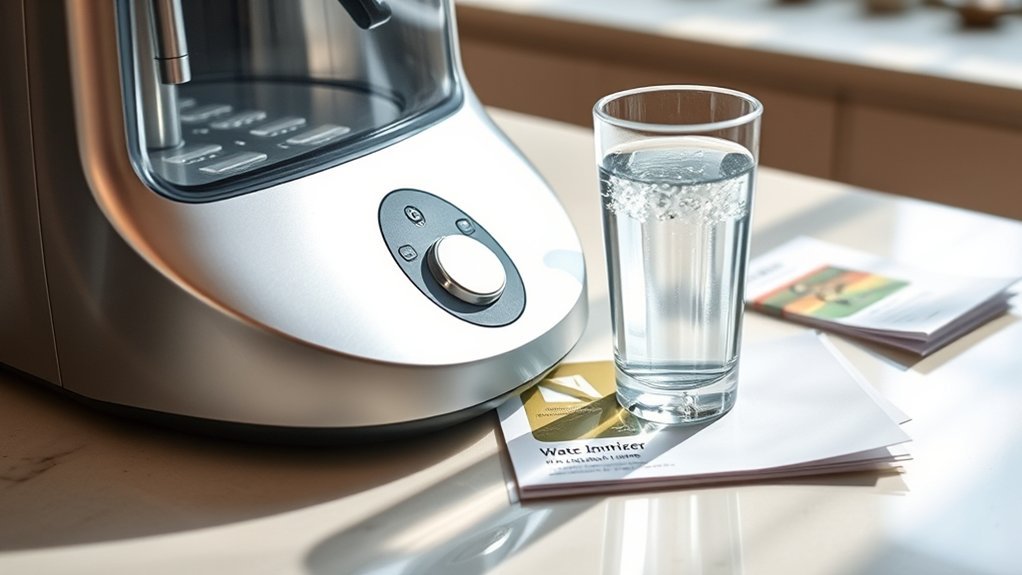
Upfront prices for water ionizers vary widely, typically ranging from several hundred dollars for basic models to several thousand for premium units. We should compare specifications rather than assume price predicts performance. Plate count, electrode material, flow rate, and control features can explain differences, but manufacturers’ claims don’t independently verify water quality or health benefits.
> Compare specifications, not price alone; manufacturer claims don’t independently verify water quality or health benefits.
- Basic units generally offer fewer settings and simpler construction.
- Midrange models may add more plates, automated controls, or broader pH selection.
- Premium systems can include advanced materials, displays, and longer Warranty coverage.
Check what the listed price includes, the warranty’s exclusions, and replacement-part availability. Financing options can spread payments, but we should compare the total repayment amount with the cash price, including interest and fees. A higher purchase price makes sense only when documented features and service terms justify it.
Factor In Installation and Setup Costs
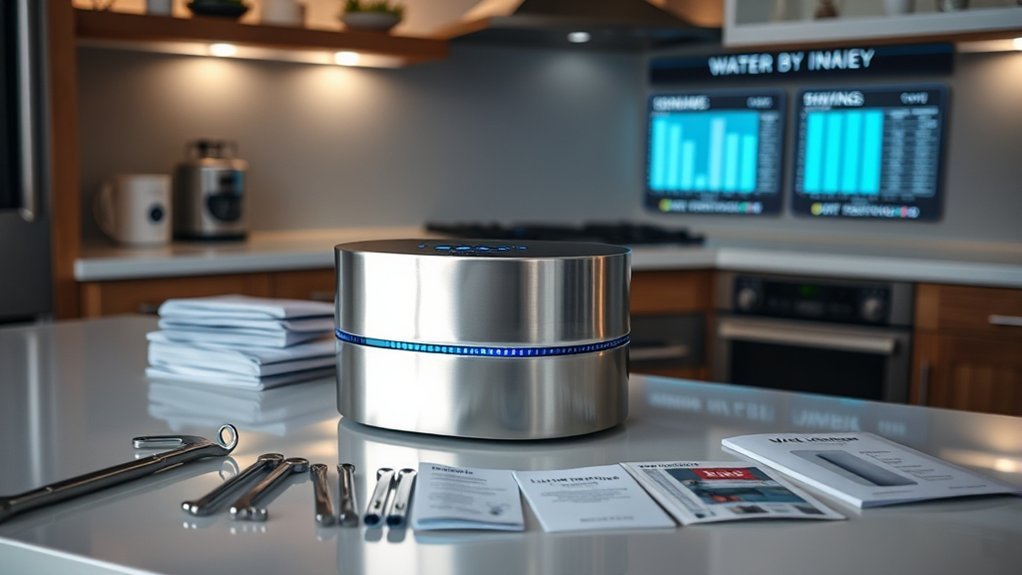
We should include equipment and labor costs when estimating a water ionizer’s installed price, since requirements vary by model and site. Check whether your plumbing needs modifications, such as a dedicated connection or drain. We should also account for recurring setup expenses, including replacement fittings and maintenance-related service.
Equipment and Labor Costs
Installation adds more than the ionizer’s purchase price: the total depends on the unit’s specifications, compatibility with your plumbing, and the work required to connect and test it. We should compare itemized quotes, since equipment and labor costs vary with installation complexity and local pricing.
- Equipment: Check whether the quote includes fittings, tubing, filters, and any manufacturer-required components. Confirm these match the model’s specifications.
- Labor: Ask how many hours the installer expects to spend and what Labor rate applies. A qualified technician may charge more but can verify connections and operation.
- Other charges: Clarify whether equipment rental, travel, testing, or disposal fees apply. These costs should appear separately, not as unexplained additions.
We can then compare total installed prices—not just hourly rates—and confirm warranty coverage for both the unit and installation. Get the estimate in writing.
Plumbing Modifications
If your sink lacks a compatible connection, plumbing modifications can add to a water ionizer’s setup cost. We should check the faucet, shutoff valves, and available space before choosing a model. Some units connect through a diverter; others need a dedicated cold-water line, which may require pipe rerouting or cabinet alterations.
| Modification | When needed | Cost driver |
|---|---|---|
| Adapter fitting | Faucet threads don’t match | Compatibility |
| Dedicated line | No suitable feed exists | Pipe access |
| Cabinet alteration | Unit or tubing won’t fit | Material and labor |
We can ask a plumber to assess access and local code requirements, since concealed pipes and tight cabinets increase labor. Confirm whether the quoted installation includes fittings, drilling, and leak testing. These one-time changes affect setup costs; they don’t indicate the ionizer’s filtration performance or justify assuming every sink needs alterations.
Ongoing Setup Expenses
After installation, budget for recurring costs that keep a water ionizer operating, including replacement filters, periodic cleaning, and any service visits required by the manufacturer. These expenses vary with water quality, household consumption, model design, and filter capacity, so we should check the manual and local parts prices before buying.
- Filters: Track rated capacity and replacement intervals; sediment or mineral loads may shorten service life.
- Cleaning: Follow the manufacturer’s descaling schedule, since mineral buildup can reduce flow and electrode performance.
- Service and coverage: Compare labor charges, warranty extensions, and exclusions; extended plans may not cover consumables or routine maintenance.
We can estimate annual ownership costs by multiplying expected filter changes by current prices, then adding cleaning supplies and likely service fees. This forecast helps us compare models on total cost, not purchase price alone, and avoid unexpected maintenance spending.
Compare Filter Replacement Costs
Filter replacement costs vary by ionizer model, water quality, and usage, so compare total annual expenses rather than the price of a single cartridge. Check each manufacturer’s specified replacement frequency and cartridge price, then calculate Annual filter cost by multiplying the number of yearly replacements by the unit price. Include every required stage, since some systems use multiple cartridges with different service intervals.
We should also verify capacity ratings against our household’s actual daily consumption. A cartridge rated for a given volume may need earlier replacement if incoming water contains more sediment, chlorine, or other contaminants. Compare replacement indicators and published test data, but treat indicator alerts as prompts, not proof of remaining capacity. Review warranty terms and cartridge availability, too; proprietary filters can raise long-term costs or limit sourcing. Using these figures, we can compare models on a consistent annual basis rather than relying on advertised cartridge prices.
Estimate Electricity and Maintenance Expenses
Beyond cartridge costs, we should estimate electricity use and routine maintenance to compare each ionizer’s full operating cost. Electricity consumption depends on rated power, operating time, and standby draw, so we shouldn’t assume every model costs the same. Check the manual or product label, then estimate annual energy use in kilowatt-hours: watts multiplied by hours of use, divided by 1,000.
- Usage: Multiply typical daily operating minutes by the unit’s wattage to estimate active electricity demand.
- Standby: Include continuous standby power; even a small load can add up over a year.
- Routine maintenance: Budget for cleaning cycles, replacement cleaning agents, and any service parts beyond filter cartridges.
We can multiply estimated kilowatt-hours by our local electricity rate and add documented maintenance costs. This provides a transparent annual operating estimate, not a guarantee.
Weigh Convenience Against Bottled Water
Convenience matters when we compare an ionizer with bottled water: an ionizer provides treated water at home on demand, while bottled water requires purchasing, carrying, and storing supplies. We should assess how each option fits our routines, not assume one is universally easier.
| Factor | Home ionizer | Bottled water |
|---|---|---|
| Daily access | Available at home | Requires stored stock |
| Travel | Needs another source | Portable bottle convenience |
| Out-of-home use | Depends on refill station access | Available where sold |
At home, an ionizer can reduce shopping trips and storage needs, but it doesn’t supply water away from the kitchen. Bottles travel with us, yet availability depends on what we carry or can buy. Refill station access may narrow that gap, though location and hours matter. We can compare these practical constraints against our household’s consumption patterns and travel frequency before choosing. Convenience is consequently a use-case calculation, not a fixed product advantage.
What Benefits Do Water Ionizers Actually Offer?
We can assess a water ionizer’s practical benefits by testing whether it improves taste, adjusts pH as claimed, and reduces contaminants through its filtration system. These outcomes depend on the source water and the unit’s design, so we shouldn’t treat them as guaranteed. We’ll examine each benefit and distinguish measurable performance from marketing claims.
Improved Taste
Because taste depends on a water supply’s mineral content, disinfectants, and other dissolved substances, a water ionizer’s effect varies by source. We shouldn’t assume the device will improve every glass: its filter may reduce chlorine or certain compounds, while electrolysis can alter mineral balance and perceived flavor. Flavor improvement consequently depends on the incoming water and the unit’s filtration performance, not simply its marketing claims. We can assess likely changes by checking water quality reports and comparing samples under consistent conditions.
- Chlorine reduction may lessen medicinal or swimming-pool notes.
- Mineral changes can make water seem smoother, sharper, or more metallic.
- Existing contaminants may persist unless the filter is certified to reduce them.
If you prefer the treated sample, drinking enjoyment may increase. Still, taste is subjective, and we should distinguish preference from evidence of improved safety or health.
Adjustable pH Levels
Beyond taste, many ionizers let us select water with different pH readings by changing the electrolysis settings. This control can suit household preferences, but we shouldn’t treat a higher pH as proof of better hydration or health. The device separates water through electrolysis; its output depends on source-water chemistry, flow rate, and electrode condition. We can verify readings with a calibrated meter, since display values may drift and pH calibration matters for reliable comparison. Settings also affect maintenance: mineral deposits can reduce performance, while frequent operation may shorten Electrode lifespan. Before paying extra for many presets, we should check whether the manufacturer specifies measurable output ranges, testing conditions, and replacement costs. Adjustable pH offers flexibility, not an established medical benefit, so we should choose settings for practical use rather than unsupported health claims.
Filtration Benefits
Although water ionizers may include built-in filters, filtration comes from the filter media—not electrolysis. We should assess filtration separately from claims about alkaline water: performance depends on the cartridge, its certification, and timely replacement. A unit’s filter may provide:
- Sediment removal: Screens or depth media can capture particles such as rust and sand, improving clarity and protecting downstream components.
- Contaminant reduction: Activated carbon can reduce chlorine, taste, and odor; other substances require media specifically tested for them.
- Documented performance: Independent certification, such as NSF/ANSI standards, helps verify reduction claims for particular contaminants under defined conditions.
We shouldn’t assume a filter removes every pollutant, including dissolved metals or microbes. Check the product’s performance data, source-water conditions, and replacement schedule. If you need a specific contaminant addressed, select a system certified for that reduction, rather than relying on ionization alone.
Separate Health Claims From Good Evidence
When evaluating water ionizers, we should distinguish measurable changes in water chemistry from claims that those changes improve health. An ionizer can alter pH and oxidation-reduction potential, but these measurements don’t establish prevention or treatment of disease. We should ask whether proposed benefits appear in well-controlled human studies, not infer them from laboratory chemistry or testimonials.
Clinical trial design matters: researchers need adequate sample sizes, predefined outcomes, suitable comparison groups, and enough follow-up to detect meaningful effects. Blinding can be difficult when water tastes different, so investigators should assess whether expectations influence reported symptoms. Placebo effects may improve perceived well-being without demonstrating a specific physiological benefit from ionized water. We should also examine independent replication, conflicts of interest, and adverse-event reporting. Until robust evidence supports a claim, we shouldn’t treat it as a proven health benefit.
Compare Ionizers With Lower-Cost Alternatives
We should compare an ionizer’s purchase price with lower-cost filtration options. Filtration removes specified contaminants, while ionization changes water chemistry; neither function substitutes for the other. We can assess whether the added cost matches your water-quality needs.
Upfront Cost Comparison
A water ionizer typically costs several hundred to several thousand dollars upfront, while a pitcher filter, faucet-mounted filter, or countertop purifier often costs far less. We should compare purchase prices alongside household budgets, not assume a higher price guarantees greater value. Check current retailer quotes because models, installation, and included accessories change total costs.
- Pitcher filters usually require the smallest initial outlay, though replacement cartridges add recurring expenses.
- Faucet-mounted units cost more than basic pitchers but generally avoid a large equipment purchase.
- Countertop purifiers vary widely; compare the quoted price with an ionizer’s price before choosing.
We can also ask whether financing options add interest or fees, increasing the final amount paid. Resale value may offset some expense, but it’s uncertain and shouldn’t drive our budget. Consider the upfront difference against your available cash and intended ownership period.
Filtration Versus Ionization
Although ionizers and filters can both improve water’s taste, they work differently: filters reduce specific contaminants through tested media, while ionizers use electrolysis to change pH and do not necessarily remove contaminants. We should match treatment to a water test, not assume higher pH means greater purity. Activated carbon can reduce chlorine, some organic compounds, and odors; certified reverse-osmosis systems can also reduce dissolved salts and selected metals. Their performance depends on media, maintenance, and verified claims.
Membrane chemistry determines which dissolved substances a membrane rejects, while contaminant pathways explain how pollutants enter source water and reach a tap. We can compare these risks with a system’s independent certification and replacement costs. For many households, a certified filter costs less than an ionizer and targets defined contaminants. Ionization alone isn’t a substitute for filtration when contaminant reduction is the goal.
Decide Whether a Water Ionizer Fits Your Budget
Before buying a water ionizer, compare its upfront price and ongoing filter costs with your household’s water use and budget. Budget planning should include installation, replacement cartridges, electricity, and any required water testing. We can estimate annual ownership costs by adding these expenses, then dividing by the volume of water we expect to use.
- Check the manufacturer’s filter replacement schedule and current cartridge prices; actual life may vary with water quality and usage.
- Compare total costs with a suitable filtration system, since ionization doesn’t necessarily remove contaminants unless the unit includes certified filtration.
- Consider purchase timing: waiting for a verified discount may help, but don’t let promotional claims replace cost and performance checks.
If the total strains your budget, we can postpone buying or choose a lower-cost option. A purchase makes financial sense only when its measurable benefits justify both initial and recurring expenses.
Frequently Asked Questions
How Long Does a Water Ionizer Typically Last?
A water ionizer’s Expected lifespan is typically 10–15 years with proper maintenance. We recommend following the manufacturer’s replacement timeline for filters, usually every 6–12 months, since water quality and usage can shorten component life.
Can a Water Ionizer Treat Well Water?
Yes, we can use a water ionizer with well water, but we should test it first. Well water pretreatment may be necessary because groundwater mineral content, iron, or contaminants can damage equipment or affect water quality.
Does Water Ionizer Installation Affect My Home’s Plumbing Warranty?
It depends: an ionizer installation may affect your plumbing warranty if it causes damage or violates terms. We recommend checking your warranty and installer’s insurance; an adage applies: better safe than sorry about installation liability.
Are Water Ionizers Compatible With Every Kitchen Faucet?
No, water ionizers aren’t compatible with every kitchen faucet. We recommend checking Faucet adapter compatibility and diverter valve options against your faucet’s thread size, design, and manufacturer specifications before purchasing or installing equipment.
Can I Take a Water Ionizer With Me When Moving?
Yes, we can take most water ionizers when moving. During Relocation planning, we should check the model’s manual, disconnect water and power safely, drain components, and protect fittings. Moving day packing should prevent impact damage.
Conclusion
We should judge a water ionizer by its total cost of ownership, not its advertised price. Add installation, replacement cartridges, electricity, maintenance, and repairs, then compare that annual expense with household use and certified filtration alternatives. We shouldn’t treat ionization as contaminant removal or assume health benefits without strong evidence. Independent testing can verify specific reduction claims. If documented performance and convenience justify the premium, it may fit our budget; otherwise, we’re better off keeping our powder dry.