Ad Blocker Detected
Our website is made possible by displaying online advertisements to our visitors. Please consider supporting us by disabling your ad blocker.
Like choosing a car, comparing water ionizer prices means looking beyond the sticker. We can find models priced from several hundred to several thousand dollars, but purchase price alone won’t show which offers better value. Installation, replacement filters, cleaning, repairs, and warranty coverage can shift the total considerably. Let’s compare budget, midrange, and premium options—and see which costs are easy to overlook.
Key Takeaways
- Water ionizers range from several hundred to several thousand dollars; compare models within your budget tier.
- Compare filtration, electrode design, and useful features, but don’t assume a higher price guarantees better performance.
- Add installation, replacement filters, cleaning, and service costs to the upfront price.
- Check warranty coverage, repair terms, and replacement-part availability before choosing a model.
- Estimate total ownership costs over your expected years of use, then compare value—not sticker price alone.
What Do Water Ionizers Cost?
What do water ionizers cost? Typical upfront price ranges run from several hundred dollars to several thousand, depending on the unit’s design, filtration, and installation needs. We can compare these figures with the cost of simpler water-treatment options, which generally require less initial spending but may offer different functions. A purchase price doesn’t show the full financial picture, however. Long term ownership expenses can include replacement filters, cleaning supplies, repairs, and any professional service. Some models use more costly or frequent replacement parts, while others need less routine maintenance. Before choosing, we should check what the quoted price includes, how often components need replacing, and whether installation is extra. These details help us estimate the total cost over time and compare products on a consistent basis, without relying on the sticker price alone.
Compare Budget, Midrange, and Premium Models
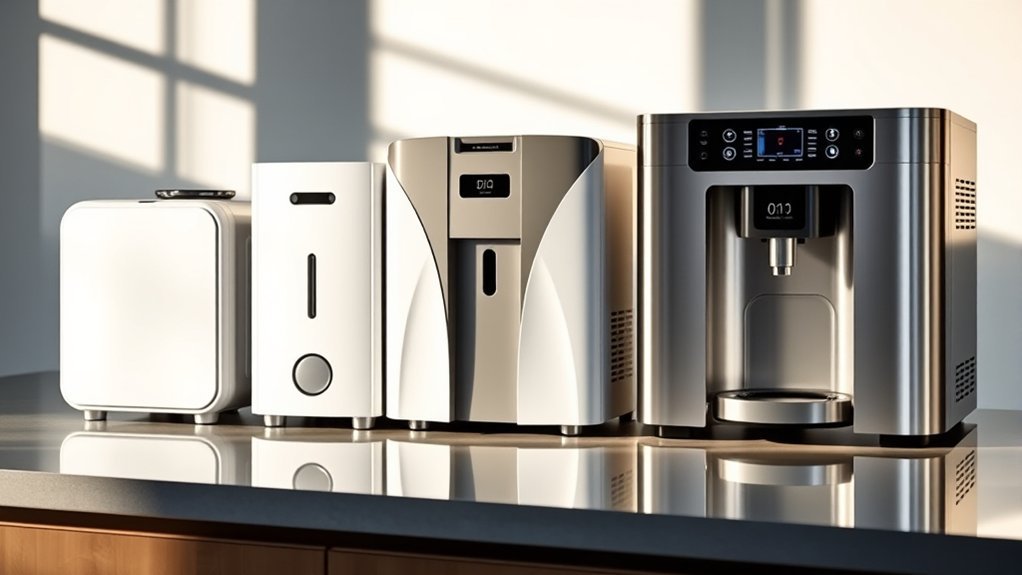
Once we account for purchase and ownership costs, comparing models by price tier can clarify what each budget buys. Budget models from budget friendly brands generally cost less upfront, making them a practical choice when we want basic operation and can accept simpler construction. Midrange units usually require a larger initial outlay, but may balance purchase price, durability, and expected service costs. Premium models carry the highest prices; we should weigh that expense against our planned years of use rather than assume a higher price guarantees better value. Across tiers, compare warranties, replacement-part availability, and maintenance requirements to estimate ownership costs. We can also consider resale value, though used prices depend on condition, age, and buyer demand. By matching a tier to our budget and replacement timeline, we can compare costs more fairly.
How Do Features Affect Water Ionizer Prices?

When we compare water ionizer prices, we’ll find that models with more, higher-quality electrodes generally cost more than basic units. Advanced filtration can also raise the price, especially when systems include multiple stages or replaceable cartridges. We should compare controls and presets too: simple interfaces tend to cost less than models offering more settings and automated options.
Electrode Count And Quality
Electrode count and build quality can raise a water ionizer’s price, but more plates don’t automatically mean better performance. We should compare plate design, materials, and warranty evidence rather than rely on count alone. More electrodes may support greater output or steadier operation, yet their value depends on how well the unit uses them.
- Electrode plate composition: Titanium plates with a durable platinum coating typically cost more than less robust materials; coating quality also matters.
- Plate area: Larger surfaces can increase contact, while compact designs may suit lower household demand.
- Construction: Secure assembly and corrosion resistance can justify a higher price when manufacturers provide clear specifications.
- Electrode lifespan testing: Independent or documented testing helps us compare durability claims; vague promises offer less assurance.
We’ll pay more confidently when evidence supports longevity and useful capacity, not simply a higher plate count.
Filtration System Features
Beyond electrode design, a water ionizer’s filtration system can substantially affect its price. Basic models may use a single carbon filter to improve taste and reduce chlorine, while higher-priced units often combine multiple stages or specialized media to address a broader range of contaminants. We should compare stated contaminant reduction claims with independent test data, since more stages don’t automatically mean better performance. Filter design also influences mineral retention: some systems aim to remove unwanted substances while preserving beneficial minerals, whereas others may alter mineral content more substantially. Replacement costs matter, too. Proprietary cartridges can raise long-term expenses, while widely available filters may cost less, though compatibility and certification still count. When comparing prices, we should weigh filtration performance, cartridge lifespan, and ongoing costs—not just the number of stages.
Controls And Presets
Controls and presets can add to a water ionizer’s price by making operation more convenient and precise. Basic models often use simple buttons and a few fixed settings, while premium units may offer touchscreens, clearer displays, and more control over water selection. We can compare these features by considering how often we’ll use them:
- Control panel design: Large labels and responsive buttons can simplify daily use; advanced screens typically cost more.
- Preset variety: Multiple options provide quicker access to common settings, but may add little value if we use only one.
- Preset customization: Some models let us save preferred settings, offering flexibility beyond fixed presets.
- Feedback and alerts: Status indicators can help us monitor operation, though added electronics may raise the price.
Choose controls that match our routines, not simply the longest feature list.
Compare Filtration, Installation, and Warranty Costs
As we compare water ionizer prices, we should include filtration costs, since replacement filters can make one model more expensive to maintain than another. We’ll also compare installation fees, which vary depending on whether setup is included or requires a professional. Finally, we should weigh warranty costs against coverage length and terms to see what each price includes.
Filtration System Costs
Filtration costs can make two similarly priced water ionizers differ substantially over time. We should compare replacement schedules, cartridge prices, and filtration stages, not just the unit’s purchase price. A model with more filters may address more contaminants, but it can also require costlier, more frequent replacements.
- Check each cartridge’s price and rated lifespan; actual use may shorten it.
- Compare annual filter costs using household water usage analysis.
- Include Water source quality testing costs when deciding which filtration level you need.
- Confirm whether replacement filters are readily available and covered by the warranty.
We’ll get a more realistic ownership estimate by adding expected filter purchases over several years. Don’t assume the most expensive system offers the best value: match its filtration capacity to your water quality and usage, then compare total recurring costs across models.
Installation Fees
Installation fees can change the value of a water ionizer, especially when models differ in plumbing requirements. A countertop unit may connect to an existing faucet with a simple adapter, while an under-sink model can require new tubing, a dedicated faucet, or cabinet modifications. We should compare quoted labor and parts, not just the unit price, because a lower-cost model may need more work. Plumbing compatibility matters: check your faucet type, water pressure, available space, and connection sizes before buying. Ask installers whether their estimates include travel, disposal, and any follow-up visit. Permit requirements vary by location and by the scope of plumbing changes, so we should confirm local rules before scheduling work. If installation is optional, compare the DIY instructions and tools needed with professional service costs to judge the true total.
Warranty Coverage Costs
After comparing installation quotes, we should also account for warranty coverage, which can affect a water ionizer’s long-term cost. A lower purchase price may include limited protection, while a costlier model may cover key components longer. We should compare these details alongside filter and installation expenses:
- Coverage period: Check how long parts, labor, and the electrolysis chamber remain protected.
- Repair exclusions: Review whether scale buildup, improper maintenance, or water damage voids coverage.
- Extended warranty: Compare its price with likely repair costs, and confirm whether it adds meaningful years or services.
- Service terms: Check shipping fees, authorized repair requirements, and whether loaner units are available.
We should also confirm whether routine filter replacements fall outside warranty coverage; they often do. Comparing total ownership costs—not warranty length alone—helps us judge whether added protection offers practical value. Keep receipts and follow maintenance instructions to preserve eligibility.
What Will Filter Replacements and Maintenance Cost?
While a water ionizer’s purchase price varies widely, filter replacements add a recurring cost that can change which model offers better long-term value. We should compare cartridge prices, replacement intervals, and included filters before estimating annual filter replacement costs. A lower-priced unit may need more frequent changes, while a premium model may use costlier cartridges less often.
| Cost item | What to compare |
|---|---|
| Replacement filters | Price and recommended interval |
| Maintenance | Cleaning needs and supplies |
Routine maintenance expenses can include cleaning plates, sanitizing components, or replacing seals. We can check whether the manufacturer provides cleaning materials and clear instructions; these affect upkeep time and out-of-pocket costs. Water quality and usage may shorten filter life, so published estimates aren’t guarantees. Compare each model’s schedule and parts availability to calculate realistic yearly upkeep, alongside its purchase price.
Choose a Water Ionizer That Fits Your Budget
To choose a water ionizer that fits your budget, compare the upfront price with filter and maintenance costs over the years you expect to use it. Start by setting spending limits that include installation and replacement filters, not just the purchase price. Then compare models by total estimated cost and features you’ll use.
> Compare the purchase price, installation, filters, and maintenance to estimate a water ionizer’s total cost over time.
- Entry-level models cost less initially but may offer fewer settings or shorter warranties.
- Midrange units often balance useful features, warranty coverage, and replacement costs.
- Premium models may add controls or capacity, but those extras don’t always justify the higher price.
- Used units can reduce upfront spending, though we should check filter availability and service history.
For evaluating long term value, estimate annual expenses and divide total ownership costs by expected years of use. We can choose a model that meets our needs without stretching our budget.
Frequently Asked Questions
Can a Water Ionizer Improve the Taste of Tap Water?
Yes, we can improve tap water flavor, but results vary. Some ionizers reduce chlorine taste through filtration, while others mainly change pH. Compare filtration performance with a certified filter; taste improvement depends on your water supply.
Is Alkaline Water Safe to Drink Every Day?
Yes, most healthy adults can drink alkaline water daily, but it offers no proven advantage over regular water for Daily Hydration. We’d consider Long Term Effects uncertain, especially with kidney disease or medications; consult your clinician.
Do Water Ionizers Remove Bacteria and Viruses?
Usually, water ionizers don’t remove bacteria or viruses; they change water’s pH through electrolysis. We should compare models’ certified filtration: Microbial removal and pathogen reduction require validated filters, such as those rated for specific microorganisms.
How Does a Water Ionizer Differ From a Reverse Osmosis System?
An ionizer is a gardener, while reverse osmosis is a gatekeeper: we use electrolysis to alter water’s pH, but RO removes many dissolved contaminants. Filtration differences matter; mineral retention is generally higher with ionizers.
Can I Install a Water Ionizer Without a Plumber?
Yes, we can install many countertop water ionizers without a plumber. DIY installation steps typically involve attaching a diverter to your faucet; plumbing requirements vary, so compare your model’s instructions and connections before starting.
Conclusion
We should compare water ionizers by total ownership cost, not sticker price alone. Budget models may save upfront, while midrange and premium units can add filtration, installation, or warranty coverage—but extra plates and features don’t guarantee better value. One useful benchmark: over five years, a $500 filter replaced annually adds $2,500 before repairs or installation. We should check cartridge availability, replacement schedules, plumbing needs, and independent performance data, then choose a model that meets our household needs and budget.