Ad Blocker Detected
Our website is made possible by displaying online advertisements to our visitors. Please consider supporting us by disabling your ad blocker.
If we use a $1,500 water ionizer for 10 years, the purchase price is only part of its cost. We’ll also need to account for replacement filters, electricity, cleaning, and repairs, then compare that total with the unit’s expected service life and resale value. Filter schedules and maintenance needs vary by model, so the true annual cost may be less obvious than the price tag suggests.
Key Takeaways
- Total ownership cost includes the purchase price, replacement filters, electricity, maintenance, repairs, and eventual replacement.
- Estimate annual filter spending from cartridge prices and replacement intervals; typical cartridges cost $20–$100 each.
- Electricity is usually modest: a 100-watt ionizer running 15 minutes daily uses about 9.1 kWh per year.
- Budget for cleaning, descaling, and possible repairs, since hard water, usage, and warranty exclusions can increase costs.
- Compare models by adding expected expenses over the same service period, subtracting resale value, and dividing by years of use.
What Does a Water Ionizer Cost Over Time?
A water ionizer’s long-term cost includes more than its purchase price: factor in replacement filters, electricity, maintenance, and any repairs. To estimate ownership costs, we can project these expenses across the unit’s expected service life, then compare the total with the initial purchase price. Electricity use is usually modest, but operating hours and local rates affect the cumulative amount. Maintenance and repairs depend on water quality, installation, usage, and component availability; we should also account for possible downtime. A longer-lasting unit may cost more upfront yet require fewer replacements, while a lower-cost model may need earlier repair or replacement. Resale value can offset some expense, though it depends on condition, age, brand support, and buyer demand. We should compare realistic scenarios rather than rely on advertised savings claims.
How Much Do Replacement Filters Cost?
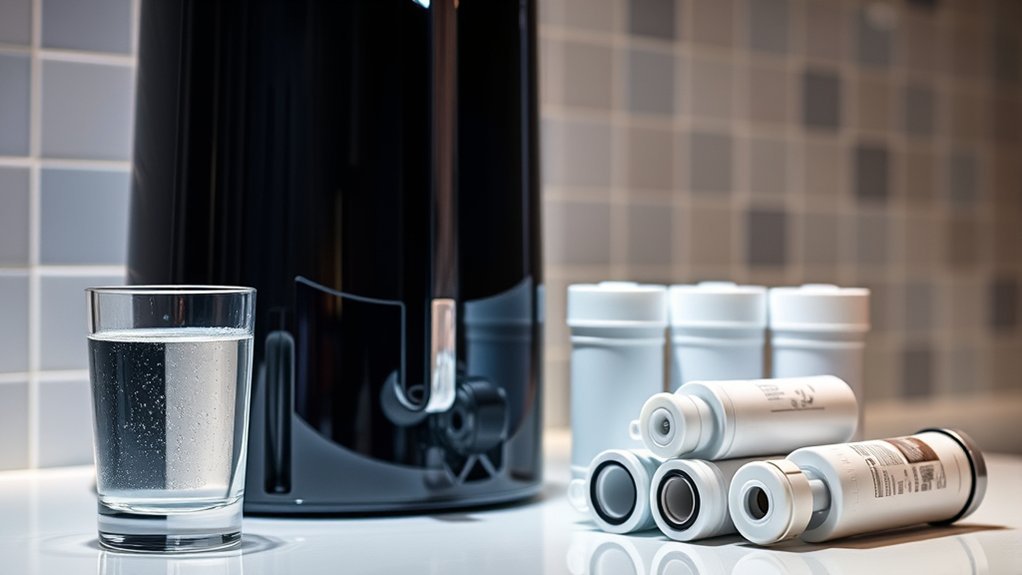
Replacement filters typically cost about $20–$100 per cartridge, though proprietary or multi-stage systems can cost more. Filter replacement prices depend on media type, capacity, and manufacturer. We should compare cartridge costs with the recommended replacement interval, not price alone.
| Filter type | Typical cost |
|---|---|
| Sediment | $20–$40 |
| Carbon | $25–$60 |
| Mineralizing | $30–$70 |
| Multi-stage set | $60–$150 |
Cartridge lifespan commonly ranges from six months to two years, depending on water quality, usage, and rated capacity. Check your model’s manual for compatible cartridges and replacement schedules; generic options may not fit or meet its specifications. To estimate annual filter spending, divide each cartridge’s price by its expected service life, then total the required stages. This calculation helps us compare ownership costs across ionizers with different filter designs and replacement intervals.
What Do Maintenance and Repairs Add?
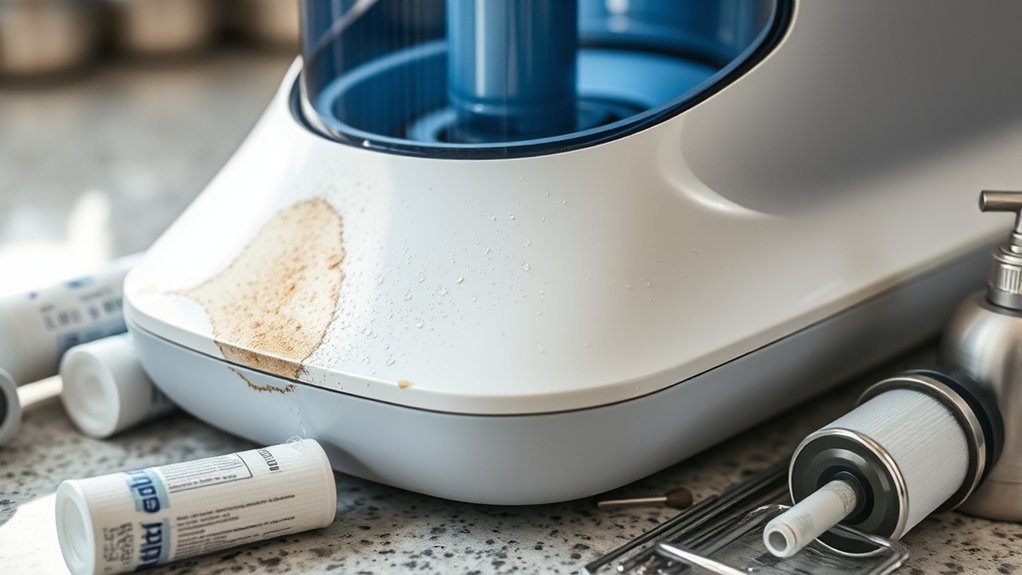
Beyond filter changes, routine maintenance and occasional repairs can raise an ionizer’s total cost of ownership. We should budget for periodic cleaning, inspection, and descaling, especially where hard water promotes mineral buildup. These tasks may be simple enough to perform ourselves, but neglected deposits can reduce flow or affect electrode performance.
Repair frequency depends on water quality, usage, unit design, and upkeep. A warranty may cover certain component failures, yet labor, shipping, or damage from improper maintenance can remain our responsibility. Before buying, we should check warranty exclusions and confirm whether authorized technicians serve our area.
Service pricing varies with the fault and parts required. Replacing a valve or control board typically costs more than basic servicing. We can estimate long-term expenses by comparing local repair rates, parts availability, and expected service intervals.
How Much Electricity Does a Water Ionizer Use?
Alongside maintenance and repair costs, electricity use contributes to an ionizer’s ongoing expense, though its effect on household bills is usually modest. We can estimate the cost by checking the unit’s rated wattage, daily operating time, and local electricity rate. Power consumption varies by model and operating mode; the unit typically draws power while producing treated water, not continuously at its maximum rating.
To calculate annual use, multiply watts by hours of operation, divide by 1,000 to convert to kilowatt-hours, then multiply by your rate. For example, a 100-watt unit running 15 minutes daily uses about 9.1 kWh per year. Standby demand may add a small amount if the display or controls remain energized between uses. Check the manual or measure consumption with a plug-in meter for a more accurate estimate.
When Might You Need to Replace Your Ionizer?
When should you replace a water ionizer? We should judge its condition by performance, not age alone. Expected lifespan varies with water quality, usage, maintenance, and component design, so the manufacturer’s guidance provides a useful baseline rather than a guaranteed deadline. We can assess four replacement warning signs:
Replace a water ionizer based on its performance, not age alone; lifespan depends on water quality, use, maintenance, and design.
- Unstable output: The unit no longer maintains its specified pH range after calibration and cleaning.
- Reduced flow: Persistent low output remains after we inspect filters and clear blockages.
- Electrical faults: Repeated shutdowns, error codes, or damaged wiring indicate unreliable operation.
- Plate deterioration: Corrosion or mineral damage persists despite approved cleaning and servicing.
If repairs cannot restore safe, consistent performance, replacement may be more practical than continued use. We should also replace a unit when its manufacturer discontinues essential parts, making reliable service impossible.
How Can You Estimate Your Total Ownership Cost?
To estimate a water ionizer’s total ownership cost, we should add its purchase price to recurring expenses for filters, maintenance, electricity, and repairs over the period we expect to use it. We can then subtract any resale value, if applicable, and divide the result by years of service to compare annual costs across models.
For accurate Cost calculation methods, we should use each model’s filter replacement schedule, current prices, and estimated energy consumption. Include likely service fees and a repair allowance, rather than assuming the warranty covers every failure. We can compare low, expected, and high-use scenarios to show how household water volume affects expenses.
Ownership planning also means checking whether replacement filters remain available and budgeting for eventual replacement. When we compare estimates, we’ll use the same service period and usage assumptions, so differences reflect equipment costs rather than inconsistent inputs.
Frequently Asked Questions
Does Water Hardness Affect an Ionizer’s Performance?
Yes, hard water can reduce an ionizer’s performance. We may see Scale buildup on electrodes, limiting electrolysis and water flow. We should follow manufacturer guidance for Electrode maintenance and consider pretreatment when hardness is high.
Can an Ionizer Connect to Any Kitchen Faucet?
Not every ionizer fits every kitchen faucet; like matching a key to a lock, Faucet thread compatibility determines fit. We’ll check your faucet and use diverter valve installation only when its design supports connection.
Does Ionized Water Taste Different From Regular Tap Water?
Yes, ionized water may taste different from regular tap water. Taste differences depend on mineral content and pH; we find Flavor perception varies by person, and you may notice subtle changes rather than dramatic ones.
Is an Ionizer Compatible With Well Water?
Yes, we can use an ionizer with well water, provided testing confirms suitable quality; groundwater mineral content can foul plates or affect performance, so we’ll consider Well water pretreatment—because wells rarely read manuals.
Does Installing a Water Ionizer Affect Drinking Water Safety?
Installing a water ionizer doesn’t inherently compromise drinking water safety. We should assess source-water quality, since ionizers may not remove Drinking water contaminants. Follow Installation safety precautions, verify certification, and test treated water regularly to confirm safety.
Conclusion
When we compare water ionizers, we should count the purchase price, replacement filters, electricity, cleaning, and likely repairs across the expected service life. Filter schedules and local power rates can shift the total substantially, while resale value may offset some expense. We can estimate annual ownership cost by subtracting expected resale value from projected lifetime spending, then dividing by years of use. This calculation gives us a clearer comparison than upfront price alone—and keeps surprise costs from becoming a mountain.